 English
 ភាសាខ្មែរ
 中文 (中国)
 日本語
日本語 Русский
 ไทย
ไทย Français
 العربية
 Türkçe
 Bahasa Indonesia
 한국어
한국어 Deutsch
 Bahasa Melayu
 Tiếng Việt
 Español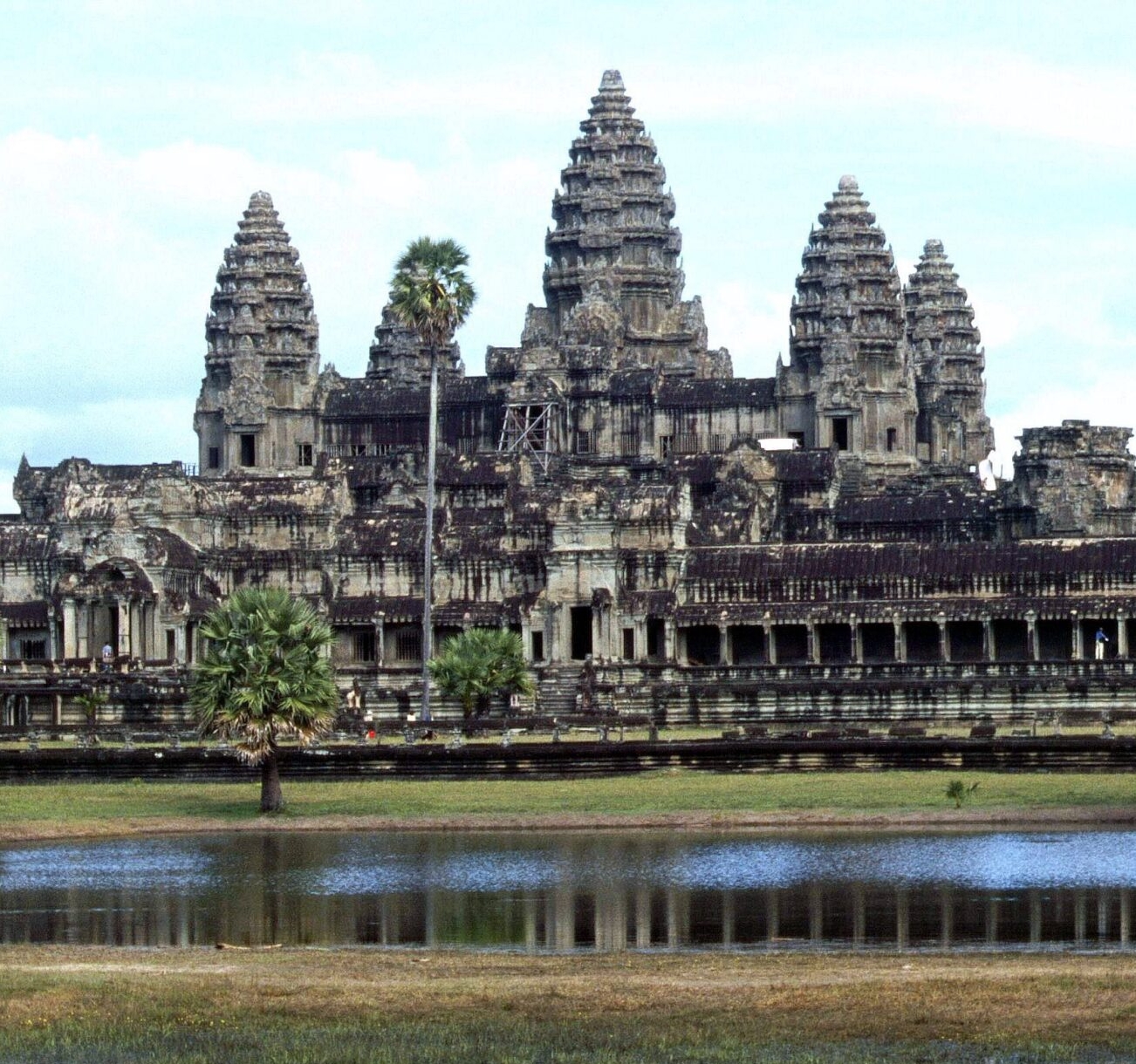
Religion in Cambodia is closely connected with community life, festivals, art and ideas about generosity and respect. Theravada Buddhism is the religion of the state and the faith reported by most people, while Muslim, Christian, Indigenous and other communities are also part of the country’s religious landscape.
Religion in Cambodia at a glance
- Constitutional position: Buddhism is the state religion, and freedom of belief and worship is guaranteed within the law.
- 2019 census: 97.1% Buddhist, 2.0% Muslim, 0.3% Christian and 0.5% other, with rounding.
- Common Buddhist tradition: Theravada Buddhism.
- Place of worship: a Buddhist monastery or temple is commonly called a wat.
Buddhism in everyday life
Pagodas are places of worship, education, ceremony and community gathering. Monks receive food and other support from laypeople, while households may visit a wat to make offerings, hear teachings or mark important events. Practices differ by family, generation and locality, so no single description represents every Cambodian Buddhist.
Ideas such as merit, karma, compassion and impermanence are important in Cambodian Buddhist life. Annual observances include Khmer New Year, Visak Bochea and Pchum Ben. Public celebrations combine religious, family and community traditions.
Religious diversity
Most Cambodian Muslims are associated with Cham communities, although “Cham” describes an ethnic and cultural identity rather than a single uniform religious experience. Mosques and Muslim communities are found in Phnom Penh and several provinces, including areas along the Mekong and around Kampong Cham and Kampong Chhnang.
Christian communities include Catholic and Protestant congregations. Indigenous communities, particularly in the northeast, maintain diverse spiritual traditions connected with ancestors, land and forests. Some families combine or adapt practices over time. Chinese Cambodian communities may also observe traditions influenced by Mahayana Buddhism, Daoism and ancestor veneration.
Religion, history and heritage
Cambodia’s religious landscape has changed across centuries. Hindu and Buddhist traditions shaped the art and architecture of Angkor. Angkor Wat was originally associated with Vishnu and later became an important Buddhist site. Theravada Buddhism became increasingly influential in the post-Angkor period.
Religious institutions and believers suffered severely during the Khmer Rouge period, when worship was suppressed and clergy were persecuted. Pagodas and religious communities were rebuilt after 1979, making contemporary religious life part of Cambodia’s broader story of recovery.
How to visit a Cambodian pagoda respectfully
- Wear clothing that covers shoulders and knees when entering sacred spaces.
- Remove shoes where signs or local practice indicate.
- Ask before photographing monks, worshippers or ceremonies.
- Avoid touching sacred objects or pointing feet toward Buddha images.
- Keep voices low and follow instructions from caretakers.
Customs vary. When uncertain, watch respectfully or ask a local guide. A pagoda is an active community institution, not simply a tourist attraction.
Frequently asked questions
Is everyone in Cambodia Buddhist?
No. Buddhism is the majority religion, but Cambodia also includes Muslim, Christian, Indigenous and other religious communities.
Can visitors enter Buddhist temples?
Many temples welcome respectful visitors, though individual buildings or ceremonies may have restrictions. Follow local signs and guidance.
What is a wat?
Wat is a common term for a Buddhist temple or monastery complex in Cambodia and neighbouring countries.
Continue exploring
Read the About Cambodia guide, Cambodian history and the forthcoming Khmer language guide for related cultural context.
Sources
- Constitution of the Kingdom of Cambodia, Article 43
- National Institute of Statistics: 2019 General Population Census
- Tourism Cambodia religion reference (topic orientation only; independently written and verified).

Join The Discussion