
 English
 ភាសាខ្មែរ
 中文 (中国)
 日本語
日本語 Русский
 ไทย
ไทย Français
 العربية
 Türkçe
 Bahasa Indonesia
 한국어
한국어 Deutsch
 Bahasa Melayu
 Tiếng Việt
 Español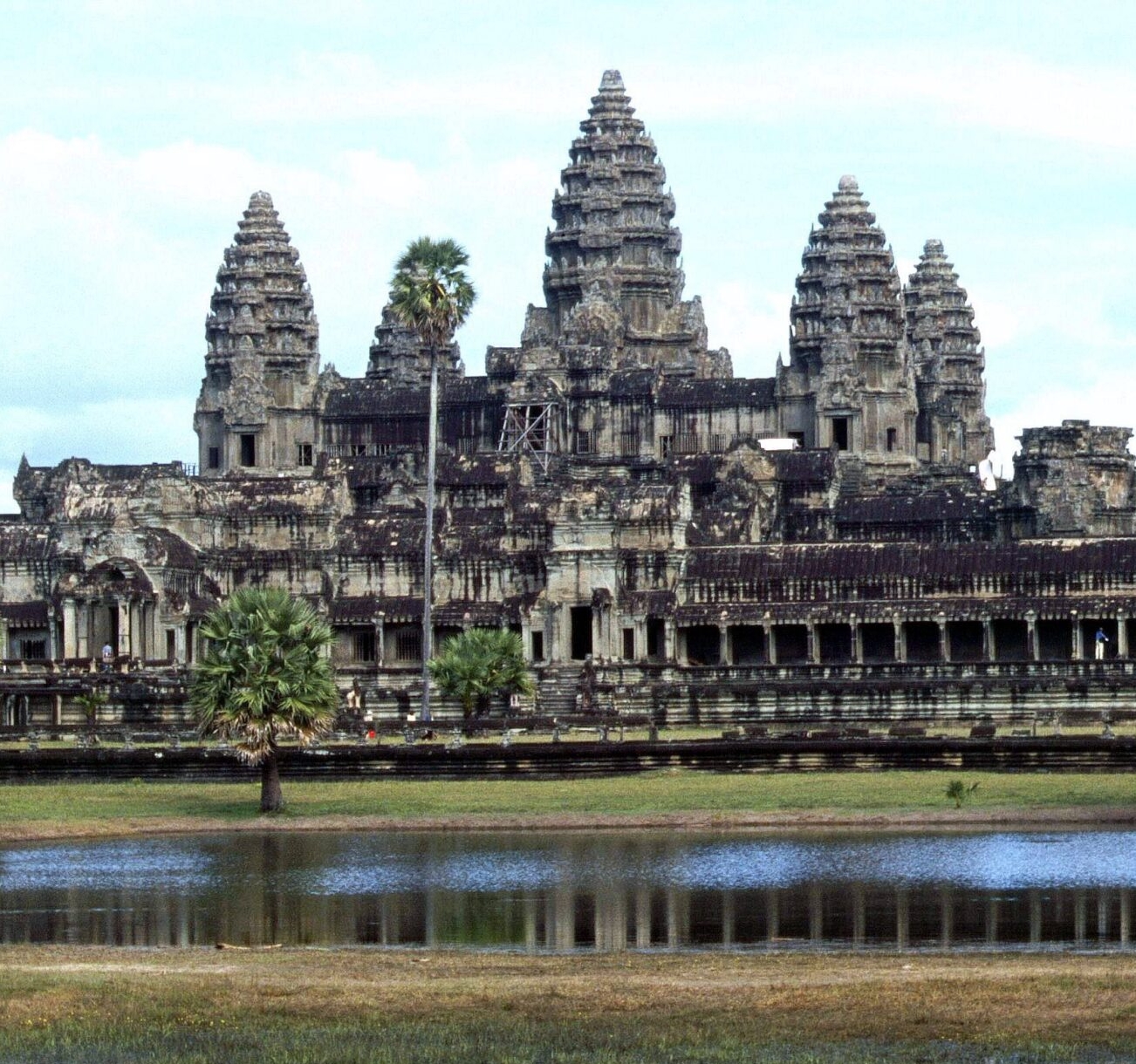
Cambodian history spans far more than the monuments of Angkor or the conflicts of the twentieth century. It is a long story of river settlements, regional trade, powerful Khmer capitals, colonial rule, independence, devastating war and national reconstruction. The timeline below offers a careful starting point rather than a complete account.
Cambodian history at a glance
- Early states: trading centres developed around the lower Mekong from the first centuries CE.
- Angkor period: successive Khmer capitals flourished from the ninth to the fifteenth century.
- French protectorate: 1863–1953.
- Independence: Cambodia achieved independence in 1953.
- Khmer Rouge rule: 17 April 1975 to 7 January 1979.
- Paris Peace Agreements: signed on 23 October 1991.
- Constitutional monarchy restored: 1993.
Early communities and regional trade
Archaeology shows that people lived in the region long before written records. By the early centuries CE, settlements near the Mekong Delta participated in trade routes linking mainland Southeast Asia with India and China. Chinese sources used names such as Funan and Chenla for political centres in the region, but historians debate how closely those labels match the way local people understood their own states.
Sites including Angkor Borei and Phnom Da preserve evidence of early urban life, religious art and connections across the region. UNESCO describes Angkor Borei as an important early Khmer centre that helped shape later urban development. These early centuries also saw the growth of written Khmer and the local adaptation of Hindu and Buddhist ideas.
The Angkor era
From the ninth century, rulers established a series of capitals in the area now known as Angkor. The Khmer Empire reached across parts of mainland Southeast Asia at different times, but its borders and influence changed from reign to reign.
Angkor was an inhabited landscape, not simply a collection of temples. Its roads, reservoirs, canals, settlements and religious buildings reveal complex systems of government, labour, belief and water management. UNESCO’s World Heritage listing covers about 400 square kilometres and identifies capitals of the Khmer Empire dating from the ninth to the fifteenth century.
Angkor Wat was built in the twelfth century under King Suryavarman II and was originally associated with Vishnu. Later Buddhist use became central to the monument’s continuing life. King Jayavarman VII, who ruled around the turn of the thirteenth century, sponsored major Buddhist monuments and infrastructure including roads, rest houses and hospitals.
The political centre gradually shifted away from Angkor. Historians point to interacting causes rather than one simple collapse: warfare, changing regional power, environmental pressures, shifts in trade and transformations in religion and political organisation all form part of the discussion.
Post-Angkor kingdoms and new centres
After Angkor ceased to function as the main royal capital, Cambodian courts established centres farther south, including Longvek, Oudong and Phnom Penh. This period was marked by trade as well as pressure from neighbouring powers. Cambodia preserved Khmer language, Buddhist institutions and royal traditions while its territory and alliances changed.
Calling these centuries a “dark age” can be misleading. The written record is thinner than for Angkor, but communities, markets, religious life and diplomacy continued. New scholarship increasingly treats the period as one of adaptation and connection.
French rule and independence
In 1863 Cambodia became a French protectorate and was later incorporated into French Indochina. The monarchy remained, while French authorities exercised decisive control over administration. Colonial rule changed taxation, infrastructure, education and urban planning, though its benefits and burdens were unevenly distributed.
During and after the Second World War, demands for self-government grew. King Norodom Sihanouk led a campaign that culminated in full independence on 9 November 1953. The years that followed brought state-building and international diplomacy, but Cambodia was increasingly affected by the wider wars in Indochina.
War, the Khmer Republic and the Khmer Rouge
Prince Sihanouk was removed as head of state in 1970, and the Khmer Republic was proclaimed under Lon Nol. Civil war intensified amid the regional conflict and foreign military intervention. Khmer Rouge forces captured Phnom Penh on 17 April 1975.
The Communist Party of Kampuchea ruled Democratic Kampuchea until January 1979. The regime emptied cities, imposed forced labour, separated families and persecuted perceived enemies and minority groups. The Extraordinary Chambers in the Courts of Cambodia states that an estimated 1.5 to 2 million people died and that the period involved crimes against humanity, war crimes and genocide. This history should be discussed with precision and respect for survivors rather than used as a dramatic backdrop.
From conflict to the 1991 peace settlement
Vietnamese forces and Cambodian allies overthrew Democratic Kampuchea in January 1979, but armed conflict and international disputes continued through the 1980s. Years of negotiation led to the Paris Peace Agreements, signed on 23 October 1991.
The agreements created a framework for a ceasefire, refugee return, elections and a new constitution. The United Nations Transitional Authority in Cambodia operated from 1992 to 1993. Elections were held in 1993, and a new constitution restored the Kingdom of Cambodia as a constitutional monarchy.
Why history remains visible today
Cambodia’s past appears in more than monuments. It shapes place names, religious practice, land use, family memories, architecture and public institutions. In Phnom Penh, colonial-era streets sit beside post-independence buildings and newer development. Around Siem Reap, Angkor is both a World Heritage landscape and a living region with villages and agriculture.
Visitors can learn responsibly by using trained guides, respecting active religious sites and treating memorial locations with care. For residents and property seekers, historical context helps explain why neighbourhoods developed where they did and why heritage protection can influence land use.
Frequently asked questions
When was Angkor Wat built?
Angkor Wat was built in the first half of the twelfth century during the reign of King Suryavarman II.
When did Cambodia become independent?
Cambodia gained independence from France on 9 November 1953.
When did the Khmer Rouge rule Cambodia?
The Khmer Rouge ruled from 17 April 1975 until early January 1979. The ECCC investigated crimes committed between 17 April 1975 and 6 January 1979.
What happened in 1993?
UN-supported elections were held, and a new constitution restored Cambodia’s constitutional monarchy.
Continue exploring Cambodia
Return to the About Cambodia guide for the wider series. Geography, religion, Khmer language, the monarchy, government and the economy each add another layer to this history.
Sources and image credit
- UNESCO World Heritage Centre: Angkor
- UNESCO: Angkor Borei and Phnom Da
- Extraordinary Chambers in the Courts of Cambodia
- United Nations: Paris Agreements and UNAMIC background
- Tourism Cambodia reference page (used for topic orientation; the article above has an independent structure and wording).
Featured photograph: Angkor Wat by janeb13 via Pixabay, used under the Pixabay Content License.

Join The Discussion