 English
 ភាសាខ្មែរ
 中文 (中国)
 日本語
日本語 Русский
 ไทย
ไทย Français
 العربية
 Türkçe
 Bahasa Indonesia
 한국어
한국어 Deutsch
 Bahasa Melayu
 Tiếng Việt
 Español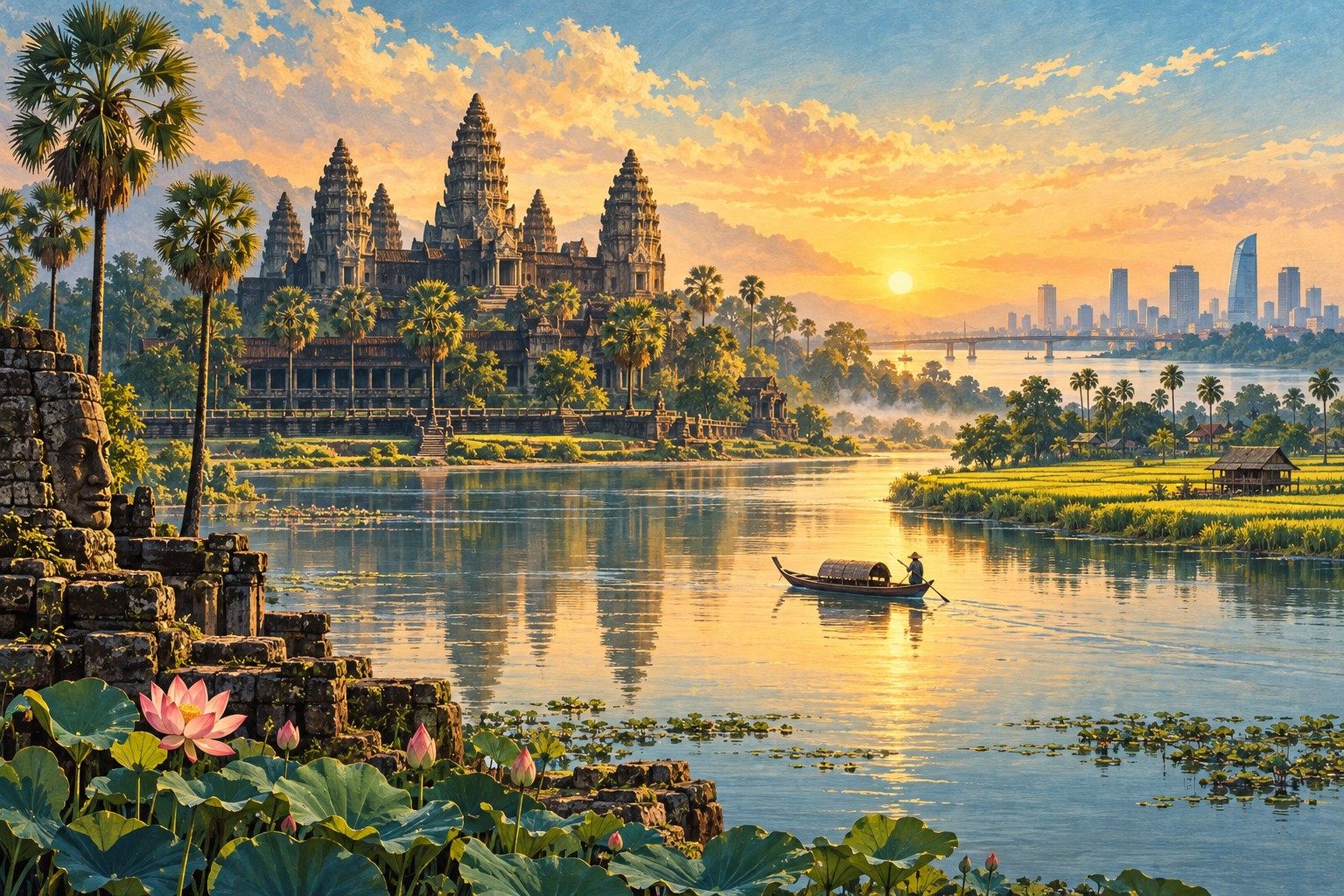
Cambodia is a Southeast Asian country where ancient Khmer heritage, river landscapes and growing cities belong to the same everyday story. Its capital is Phnom Penh, its official language is Khmer, and its borders meet Thailand, Laos and Vietnam. This guide introduces the country through seven subjects: history, geography, religion, language, monarchy, government and the economy.
For visitors and people considering a longer stay, understanding Cambodia begins with context. A temple is also a place of worship; a river is also a source of livelihoods; and a city neighbourhood is part of a much wider national story.
Cambodia at a glance
- Capital: Phnom Penh.
- Location: mainland Southeast Asia, with a coast on the Gulf of Thailand.
- Neighbours: Thailand, Laos and Vietnam.
- Official language and script: Khmer.
- Government framework: a constitutional monarchy.
- State religion: Buddhism, alongside constitutionally recognised freedom of belief.
The language, monarchy and religion entries above describe constitutional provisions; they should not be read as a claim that every Cambodian shares the same beliefs or experience. See the Constitution of the Kingdom of Cambodia.
A country shaped by water
The Mekong and Tonle Sap help explain Cambodia’s landscape. During the rainy season, the Tonle Sap River reverses direction and carries water toward the lake; in the dry season, it drains toward the Mekong. This seasonal rhythm connects the lake, surrounding floodplains and communities along the water. The Mekong River Commission’s geography guide explains the river system.
Look beyond a single image of Cambodia. Lowland agricultural landscapes, forested uplands, coastal settlements and urban districts offer very different settings. When learning about a place, ask how its water, transport connections and surrounding land shape daily life.
History: understanding Angkor in a wider story
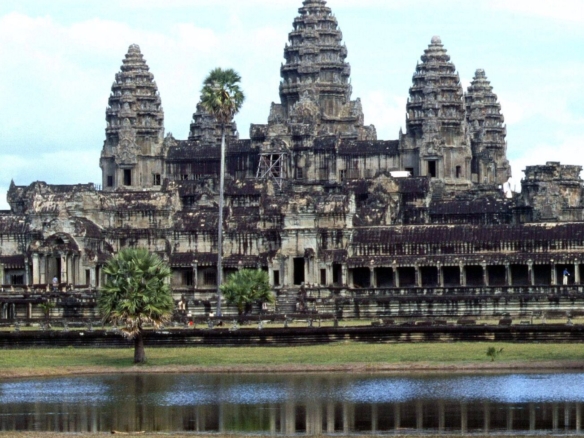
Angkor is essential to understanding Khmer heritage, but it is not the whole of Cambodian history. UNESCO describes an archaeological landscape containing capitals of the Khmer Empire from the ninth to the fifteenth centuries. Its temples, reservoirs and surviving urban traces reveal a society that organised both monumental construction and water management. UNESCO’s Angkor listing provides a useful starting point.
A thoughtful introduction also leaves room for the periods before Angkor, later royal centres, colonial rule, independence, conflict and reconstruction. Learning that wider sequence helps readers avoid reducing Cambodia either to ancient splendour or to its most painful modern chapters.
Religion and language: approach everyday culture with curiosity
Khmer language and Buddhism are useful starting points for cultural understanding, while individual families and communities have their own practices. Avoid assuming that one custom describes everyone. At a place of worship, follow posted guidance and local requests; when photographing people, ask first.
For a longer stay, learning greetings, numbers and place names is a practical beginning. Listen to local pronunciation rather than relying entirely on English spellings. Place names written in Latin letters can vary, so a Khmer address or map pin can help clarify the destination.
Monarchy and government: two different roles
Cambodia’s constitutional framework distinguishes the monarch from the government responsible for executive administration. Understanding that distinction makes news, official ceremonies and institutional names easier to follow. A guide to the monarchy should explain the Crown’s role, while a guide to government should identify institutions and date any information about officeholders.
The economy: look beyond a single growth figure
Cambodia’s economic story includes manufacturing exports, tourism, construction and real estate. The World Bank’s country overview also describes an uneven recovery across sectors. Stronger national activity does not mean every household, business or neighbourhood experiences the same conditions.
For readers exploring places to live or do business, national context is a starting point. Compare local services, transport, working patterns and the condition of individual properties separately. An economic overview cannot establish the value or suitability of a particular home.
Explore About Cambodia
This series follows seven connected topics. Start with geography to understand the setting, history to understand its development, and language and religion to understand important parts of everyday culture. Then explore the monarchy, government and economy for institutional and contemporary context.
- Cambodian history: the main periods and why they matter.
- Geography: rivers, lowlands, uplands and the coast.
- Religion: Buddhist traditions and religious diversity.
- Khmer language: its role and an introduction for learners.
- The monarchy: the Crown and its constitutional position.
- Government: institutions and their responsibilities.
- The economy: major sectors and how to interpret economic change.
Common questions about Cambodia
Where is Cambodia?
Cambodia is in mainland Southeast Asia. It borders Thailand, Laos and Vietnam and has a coastline on the Gulf of Thailand.
Is Khmer the same as Cambodian?
Khmer is the name of Cambodia’s official language. In English, “Cambodian” usually describes nationality or something associated with the country; the words are not interchangeable in every context.
Is Angkor Wat in Phnom Penh?
No. Angkor Wat is part of the Angkor archaeological area near Siem Reap. Phnom Penh is Cambodia’s capital.
Continue exploring
Use the About Cambodia collection to build your understanding one subject at a time. When you are ready to explore homes and neighbourhoods, visit Khmer Keys and connect that wider context with the places that interest you.
Sources and editorial note
Sources include the Cambodian Constitution, UNESCO World Heritage Centre, Mekong River Commission and World Bank, linked beside the relevant sections. The Tourism Cambodia overview informed topic selection. This article uses an original structure and wording. Its accompanying image is an AI-generated conceptual illustration, not a photograph of a real location.

Join The Discussion