
 English
 ភាសាខ្មែរ
 中文 (中国)
 日本語
日本語 Русский
 ไทย
ไทย Français
 العربية
 Türkçe
 Bahasa Indonesia
 한국어
한국어 Deutsch
 Bahasa Melayu
 Tiếng Việt
 Español
Cambodia’s economy combines manufacturing, construction, agriculture, tourism and a growing range of services. Strong links with regional and global markets have created jobs and investment, while also exposing households and businesses to changes in trade, property, tourism and migration.
Cambodia’s economy at a glance
Cambodia is a lower-middle-income economy that has expanded substantially since the 1990s. Garments, footwear and travel goods remain important exports. Agriculture supports rural livelihoods, tourism brings international spending, and construction and real estate have shaped the growth of Phnom Penh and other urban centres.
Electronics, vehicle parts, bicycles and other non-garment products have broadened the export base. Logistics, finance, retail, digital services and hospitality also contribute to activity.
Growth outlook in 2026
Economic forecasts change as new information becomes available. In its June 2026 update, the World Bank projected Cambodia’s real GDP growth at 3.9% for 2026 and 4.9% for 2027. It linked the slower near-term outlook to external shocks, weakness in property and construction, labour-market pressure and softer domestic demand.
The same update reported that goods exports rose strongly in the first quarter of 2026, while inflation reached 5.8% in April. These figures describe a particular period and should always be read with their publication date.
Manufacturing and exports
Export manufacturing remains central to employment and foreign earnings. The garment, footwear and travel-goods industries connect Cambodian factories with buyers around the world. Recent diversification into electronics and other manufactured products can reduce reliance on a narrow group of goods, but global demand and trade conditions still matter.
Foreign direct investment finances factories, infrastructure and property projects. The World Bank reported about US$5.1 billion in FDI in 2025, though the mix and long-term benefit of investment depend on productivity, skills and business conditions.
Agriculture and rural livelihoods
Rice is Cambodia’s best-known crop, alongside cassava, maize, rubber, cashews, fruit and other products. Fisheries around the Mekong and Tonle Sap are economically and nutritionally important. Weather, water flows, input costs, land access and market prices all affect rural incomes.
Food processing, cold storage, logistics and quality standards can add value before products reach domestic or export markets.
Tourism, services and the urban economy
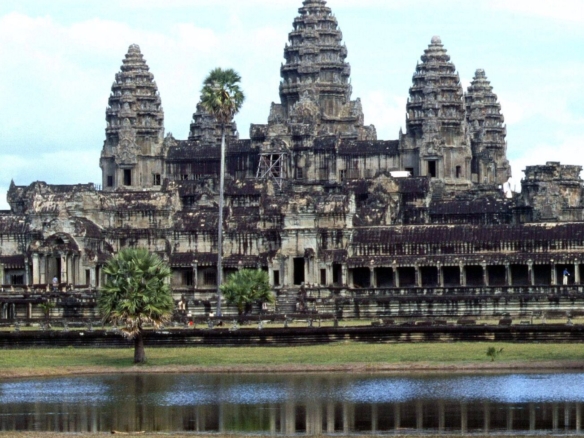
Angkor, Phnom Penh, the southern coast and ecotourism destinations support hotels, restaurants, transport operators, guides and small enterprises. Tourism can spread income across many businesses, although it is sensitive to travel costs and international events.
Services now range from traditional retail and markets to banking, telecommunications, delivery platforms and professional work. Informal businesses remain a major source of jobs: a December 2025 World Bank assessment estimated that informal firms accounted for about 90% of enterprises and 88% of employment.
Construction and real estate
Construction transformed Cambodia’s main cities during years of rapid investment. The sector now faces a more selective market, with demand varying greatly by location, price and property type. Buyers and investors should assess completed infrastructure, legal documentation, real occupancy and achievable rental demand rather than relying only on advertised returns.
Property transactions can involve title verification, taxes, registration, foreign-ownership limits and project-specific contracts. Independent legal and technical checks are essential.
The US dollar and Cambodian riel
Cambodia has a highly dollarised economy. US dollars are widely used for larger prices and transactions, while Cambodian riel is common for everyday purchases and change. The National Bank of Cambodia promotes wider use of the riel, and digital payments have expanded rapidly.
Exchange practices can vary by business. Damaged foreign banknotes may be refused, so travellers and residents should keep notes in good condition and check displayed currency carefully.
Opportunities and challenges
- Opportunities: export diversification, regional trade, agro-processing, renewable energy, logistics, tourism recovery and digital services.
- Challenges: skills gaps, informal employment, household vulnerability, property-sector weakness, climate risk and dependence on external demand.
Frequently asked questions
What are Cambodia’s main industries?
Manufacturing, agriculture, tourism, construction and services are major parts of the economy, with garments and travel goods especially important for exports.
Can economic forecasts change?
Yes. Forecasts are estimates based on current information. Check the publication date and compare the latest updates from official and multilateral sources.
What currency is used in Cambodia?
Both Cambodian riel and US dollars circulate widely, though the mix depends on the size and location of the transaction.
Continue exploring
Start with the About Cambodia guide and explore Cambodia’s geography to understand the rivers, cities and trade routes behind the economy.
Sources
- World Bank: Cambodia economic update, June 2026
- World Bank: Cambodia overview
- Tourism Cambodia economy reference (topic orientation only; independently written and expanded).

Join The Discussion